
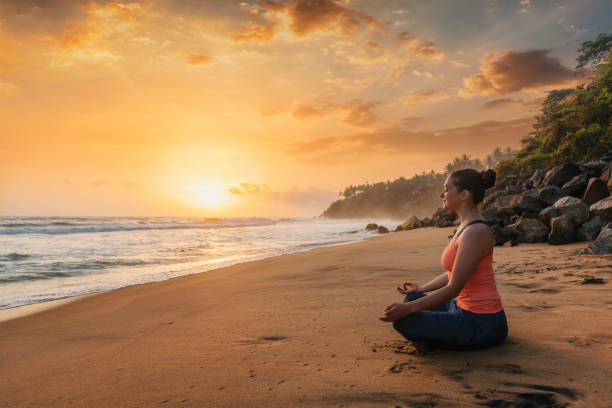

In a time when chronic stress and burnout are commonplace, healing has evolved from a reaction to disease to a daily work of self-preservation. Healing is now found in yoga studios, walking paths, therapy rooms, and cooking rituals rather than being limited to clinics and pharmaceutical drugs. And at the core of this change is a profound reality: self-care and science are no longer distinct endeavors, and movement is medicine.
Aligning our biology with our behavior is the goal of healing in action, which goes beyond exercise. It’s important to pay attention, not to nod off. And it’s a revolution of taking back our bodies, thoughts, and rhythms in a world of static screens and sedentary habits.
The Study of Motion
The advantages of physical activity are now well-established scientific facts rather than anecdotal. Frequent exercise raises neuroplasticity, controls hormones, strengthens immunity, and improves cardiovascular health. Beyond the physical realm, however, exercise is essential for mental and emotional recovery.
Exercise has been demonstrated to enhance cognitive performance, lessen anxiety, and ease depressive symptoms. Walking, dancing, or swimming are examples of rhythmic exercise that can induce a meditative state, which lowers cortisol levels and calms the nervous system. Stress cycles can be broken and emotional balance restored with even mild movement.
It’s about resetting the entire system, not just burning calories.
Self-Care That Follows You Around
Too long, self-care was portrayed as immobility: face masks, bubble baths, and alone time. We’re starting to realize that healing is a dynamic process, even if rest is essential. Self-care doesn’t always include stopping; sometimes it involves flow, such as five minutes of mindful breathing in between meetings, a nightly stroll, or a morning stretch.
Mindfulness turns into movement. Every stride, bend, or sway turns into a chance to re-establish a connection with the here and now, to feel alive, rooted, and in charge of your own story.
This has nothing to do with performance or excellence. It’s about giving yourself permission to feel, move, and let go.
Where Western Research and Eastern Wisdom Collide
Our knowledge of healing has expanded as a result of the fusion of contemporary science and traditional movement techniques. Once regarded as alternative or niche practices, yoga, tai chi, and qigong are now well known for their capacity to lower blood pressure, promote mental clarity, enhance joint health, and reduce inflammation.
Modern neurology and physiology are increasingly confirming what Eastern traditions have known for centuries: that the body contains emotion, that breath influences mind, and that energy need room to circulate.
An approach to well-being that is more comprehensive and empowered is the outcome of science finally catching up with intuition.
Moving as a Way to Release Emotions
Healing is rarely silent and isn’t linear. Emotions can occasionally manifest physically as tense shoulders, clinched teeth, and shallow breathing. Words cannot uncover and liberate what movement can.
Dancing in your kitchen. Running without any music. releasing stress prior to a challenging discussion. These actions are not insignificant; rather, they are instruments of fortitude. They relax the intellect and allow the body to speak. They provide a space where sadness, joy, rage, and hope may be felt, respected, and let go.
In summary, healing is a process rather than a final goal.
Embracing healing in motion means realizing that wellbeing is a rhythm we live by rather than a destination we reach. It’s about making little, deliberate changes that bring science and spirit into harmony. It’s important to use the body as a guide rather than a machine. It’s about believing that, even in the face of adversity, we can both move and be moved in the direction of improvement.
Because quiet isn’t necessarily a sign of recovery.
It might appear to be momentum at times.
similar to breath.
similar to movement.
Like taking things one step at a time and returning to ourselves.